
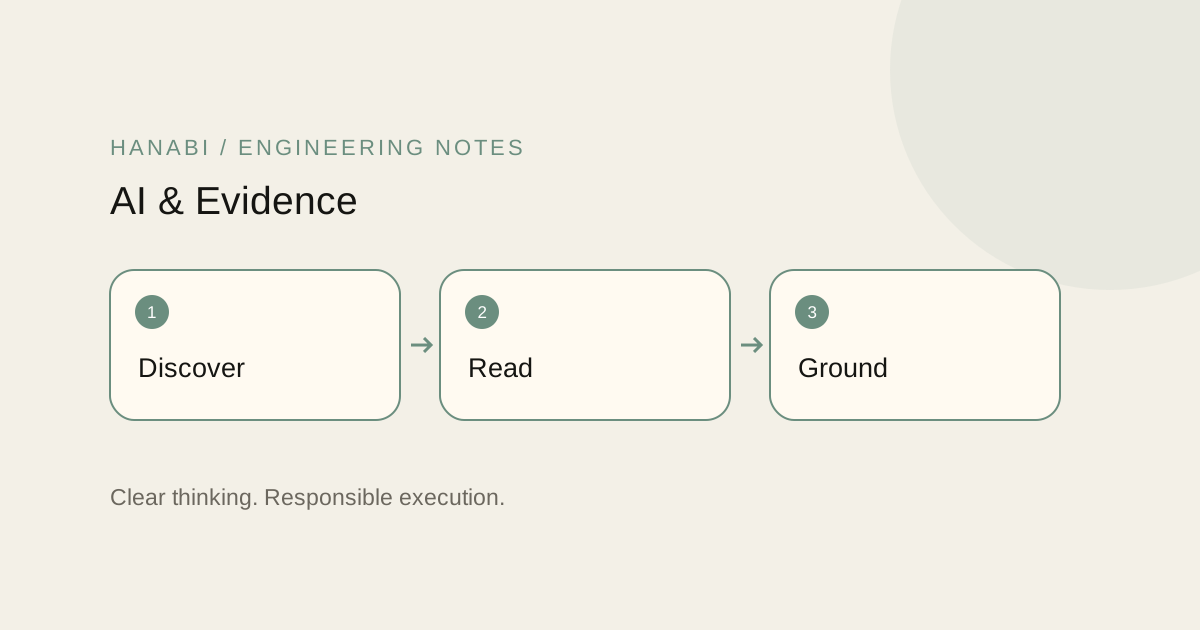
A fluent answer can still miss a decision, confuse a proposal with an approval, or overlook a later update. When building AI around business information, we care about how the system reaches its answer as much as how the answer reads.
Search finds leads, not conclusions
Search and summaries help locate promising material. They are useful for discovery, but they are not substitutes for the original messages or documents. The answer should be checked against source evidence, with enough surrounding context to understand what was actually said.
Different questions need different work
“What was the agreed deadline?” and “List every open issue” are different tasks. The first may be answered by one explicit decision. The second needs a defined scope and traversal of that scope. Finding several relevant items does not prove that every item has been found.
- Keep the requested source and date scope clear.
- Distinguish confirmed decisions from suggestions.
- State what was reviewed and what remains unknown.
A realistic example
Consider a fictional project conversation where a feature is proposed on Monday, revised on Wednesday, and approved on Friday. An answer based only on Monday’s message may sound reasonable while describing the wrong scope. Reading the original sequence makes the approval and its conditions visible.
Respect access and uncertainty
A source can be relevant without being available to the person asking. Retrieval must respect access boundaries. Failed reads and incomplete searches also need an honest outcome: they should not silently become “nothing found.”
The result is an AI experience that helps people make informed decisions: evidence where available, clear gaps where it is not, and no invented certainty to make an answer feel complete.