
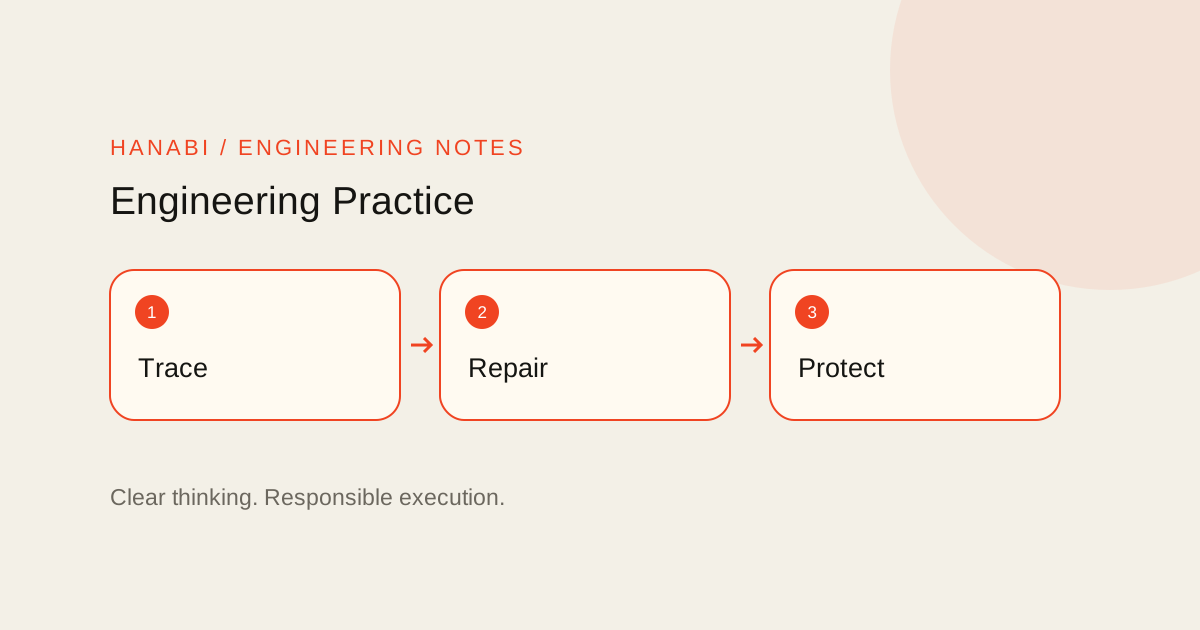
A bug report describes what someone experienced. It does not always identify where the problem started. Our engineering guidance is to trace the cause, understand the existing behavior, and fix the right layer without weakening the rest of the product.
Understand the contract first
Before editing, we inspect the reusable code and the assumptions around it. Defaults, validation, retry behavior, permissions, and compatibility with older data may look incidental. Often, they exist because a previous real-world scenario needed them. We keep those protections visible during the change.
A realistic example
Imagine a user saves a record successfully, but an optional notification service fails afterward. The screen reports “save failed,” so the user retries and creates a duplicate. This is an illustrative scenario, not a client incident. Hiding the error message would miss the underlying problem.
The fix should make the saved record authoritative and represent the notification failure separately. That may involve the API response and the interface together. The user then sees the true outcome and can act on the remaining problem without repeating a completed action.
Choose checks that protect behavior
- Verify the original failure and the normal success path.
- Check relevant permissions and older records.
- Exercise dependency failures and safe retries.
- Confirm nearby workflows still behave as intended.
Keep the system understandable
A core fix can touch more files than a quick patch. That is worthwhile when it restores a clear contract and removes the need for exceptions elsewhere. The aim is software that the next engineer can understand and the business can keep changing with confidence.