
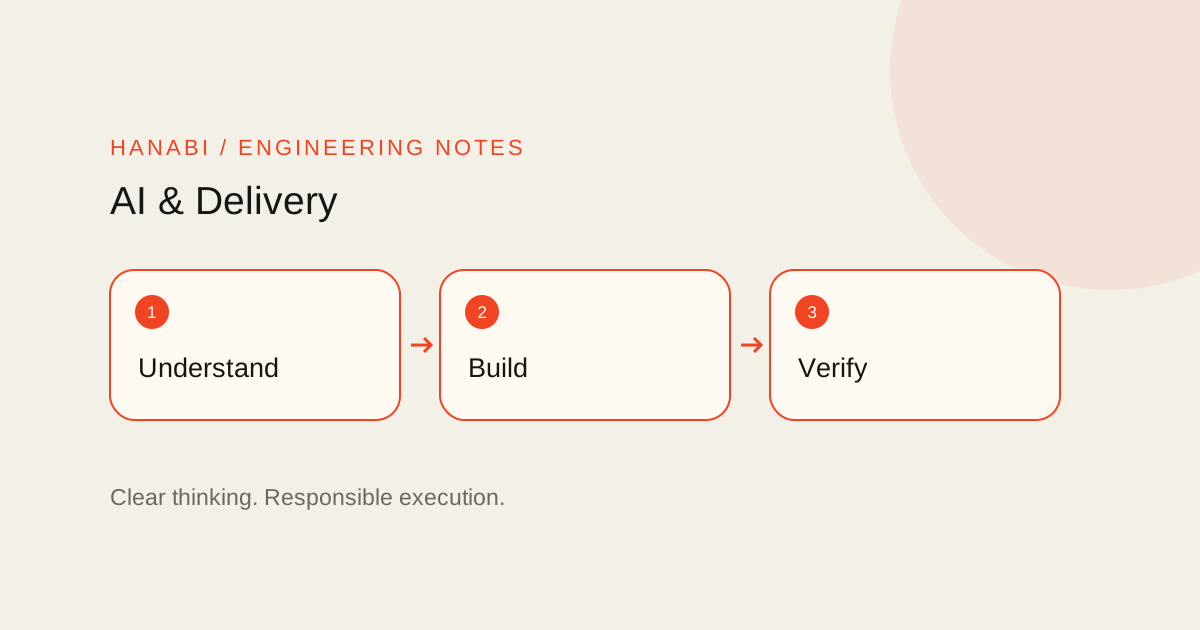
A prototype can appear in an afternoon. Keeping it useful as the business grows takes a different kind of work: understanding requirements, protecting existing behavior, and making sure changes hold up outside a demo. At Hanabi, we use AI as part of that work. The responsibility stays with us.
Start with the system, not the prompt
Before changing code, we inspect the existing flow. Where does the data come from? Who can access it? What happens when a dependency fails? Existing code often contains small decisions that protect real users. A tidy rewrite can lose those protections if nobody understands why they exist.
Give AI a useful, bounded task
AI can help trace a flow, compare implementation options, draft code, and suggest edge cases. Those outputs are candidates for review. We check them against the actual code and the intended behavior, rather than treating a confident explanation as evidence.
- Reuse established components and service boundaries.
- Review permissions, data handling, and failure paths.
- Check the affected workflow and nearby behavior.
A realistic example
Imagine adding a new field to an operational dashboard. Generating the input is the easy part. The field may also need validation, storage, permissions, exports, and compatibility with older records. This is an illustrative example: a complete change follows the data through the system, not just through the screen.
What the client is buying
Clients can use AI tools themselves, and many do. Our role is to turn an idea into an aligned, maintainable change and take responsibility for the engineering decisions around it. AI supports the execution; the technical partnership includes judgment, communication, and follow-through.